



AI godfather says it’s just a matter of time before artificial intelligence replaces all jobs
Yoshua Bengio, a pioneer in artificial intelligence research and often considered one of the godfathers of AI, warns that it is only a matter of time that AI systems will be able to replace every type of job, from office roles to skilled professions.
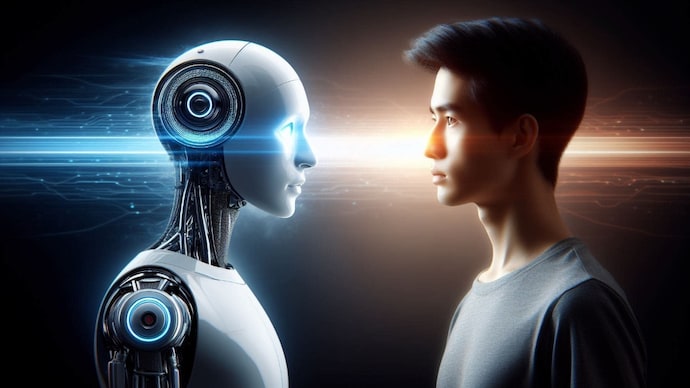

Artificial intelligence is rapidly reshaping the world we live in and the offices we work in. From automated customer support to writing long codes, we are already seeing machine models taking over repetitive or complex tasks and replacing humans. In the US alone, recent reports suggest that around 55,000 jobs have been lost due to AI-driven automation. This trend is expected to accelerate in the coming years. In fact, according to Yoshua Bengio, it is “just a matter of time” before AI replaces most – and eventually all – human jobs that we currently see.
Bengio recently appeared on The Diary of a CEO podcast, where he spoke at length about AI, the rise of automation, and the risks of letting machines take over human work. During the conversation, he argued that the roles with the highest risk are those that rely heavily on computers. He describes these as “cognitive jobs, jobs you can do behind a keyboard”, and says these are already being disrupted by increasingly capable AI systems. Although mass unemployment has not yet been achieved, Bengio says the trajectory of automation is clearly moving in that direction.
He said, “It’s more than just a matter of time. Unless we break down a scientific wall that prevents us from making AI smarter, these systems will be able to do more and more of the work that people do today.”
According to Bengio, companies are already eager to integrate AI into their workflows, even if mass adoption will take time. He explains, which is why the impact of AI taking over is often subtle at first – replacing low entry-level roles, slow hiring and quiet automation rather than sudden mass layoffs. He highlighted how young employees, especially those entering the workforce, are already feeling the pressure as companies eliminate junior positions in favor of AI tools.
Meanwhile, as far as the question of which jobs will be most affected by AI, there is also a common belief that skilled occupations can provide protection from automation. But Bengio doubts this. While physical jobs like plumbing or electrical work may take longer to change, he believes robotics will eventually close the gap. They suggest that as more robots are deployed, they will generate large amounts of data, which will accelerate their ability to learn and perform complex physical tasks.

“If you do physical work, it will take longer,” Bengio said, referencing advice often given by fellow AI pioneer Geoffrey Hinton. “But I think it’s just a temporary thing.”
Bengio, whose decades-long work helped lay the foundation for modern AI, also spoke about his regrets. Looking back, he admits that he had underestimated the scale of disruption that technology could bring. “I should have seen this coming a long time ago, but I didn’t pay enough attention to the potentially catastrophic risks,” he said. He revealed that these concerns deepened with the advent of generative AI systems like ChatGPT.