





Aditya Dhar’s Dhurandhar 2 politics explained: Anti-terrorism, not anti-Pakistan
Aditya Dhar doesn’t make Dhurandhar: The Revenge easy watching. He lets you experience the restlessness, the silence that haunts and the screams that last longer than you want. But at the heart of all this is India’s clear policy: anti-terrorism, not anti-Pakistan. Consider this your spoiler warning.

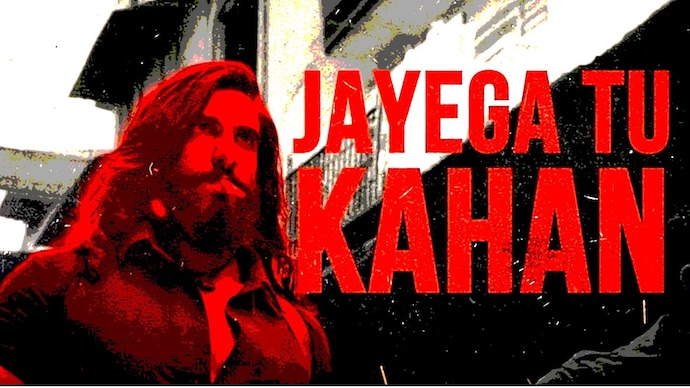


Aditya Dhar’s Dhurandhar: Revenge The mood of the country has been captured. It’s everywhere: on the streets, in drawing rooms, on social media, in newsrooms, and in deep industry conversations. But why? Is it the sheer scale, the story, the performances, the casting, or the direction? Yes, all that. But perhaps there is something beyond the craft: a message that closely aligns with the Indian government’s anti-terrorism doctrine.
❮❯
Dhar, who has also written the film, arouses nationalistic sentiments In this second chapter. if first stalwart There was a playground, vengeance it’s a game In motion. It absorbs government messages into its bloodstream. The result is cinema that is loud, sharp, bold and utterly fearless. Perhaps that is why many people are calling it a new cinematic system.
Dhar has long shown an interest in portraying a certain idea of a “new India”. Who enters enemy territory without any hesitation and attacks without apology. they did this in Uri: The Surgical Strike (2019), and he does it again here. But this time, the message is more layered. Ranveer Singh’s Hamza Ali Mazari-led film continues to underline India’s official position in recent years: India is not against Pakistan, it is against terrorism being born, nurtured and nurtured on its soil.
This stance of the government became particularly clear during Operation Sindoor, India’s counter-terrorism operation after the Pahalgam terror attack last year. India’s armed forces, both in tone and language, stressed very clearly that their fight was not with the Pakistani people or the nation-state, but with the terrorist networks operating from across the border. Prime Minister Narendra Modi has also reiterated the same thing in many of his addresses. Dhar takes that calibrated message and pushes it into the realm of popular cinema.
spoiler warning
In one of the film’s most emotionally intense moments, Hamza clearly explains this situation to his wife Yalina (Sara Arjun). He bluntly says that India’s fight is against Pakistan sponsored terrorism and not against Pakistan. He listed all the terror attacks suffered by India as a reminder of decades of violence, and directly attributed that violence to the systems that nurture and harbor cross-border terrorist groups.
The film also takes this argument further. It links various internal conflicts to Pakistan’s terror support structure: Khalistani insurgency, insurgency in Jammu and Kashmir, insurgency in the Northeast and the Naxalite-Maoist movement. The film builds itself around a familiar, politically loaded framework: a strategic framework that separates the “enemy” from the nation.
right here torrent cinema becomes interesting. It is neither neutral, nor pretending to be neutral. The director borrows, amplifies and simplifies the narrative of a nation for mainstream storytelling, and there is no room for ambiguity in how he does so.
no hiding from politics
The political context is clear. Demonetisation has been re-imagined as a covert counter-terrorism operation, real-life figures have been re-framed within this framework, and there are moments that border on ideological assertion. Some may feel as if the film is leaning towards a certain political line, even as it is completely whitewashed. But what is undeniable is the conviction. Dhar believes in what he is showing and shows it without any hesitation.


Even technically, he ensures that the viewer cannot look away. His camera lingers a few seconds longer than expected on the wounds, damage, and consequences of violence. Close-up intruders are confrontational. Violence is not made for the genre. It is made to feel heavy, long lasting, almost laxative. As if to say: If terrorism is not clean, why should it be depicted?
Dhar also disrupts the familiar grammar of the Bollywood spy-thriller. The question he seems to ask is obvious: Why isn’t a spade called a spade? Why not hit where it hurts most? Why not force the audience to sit through the restlessness, the screams, and the silence that follow atrocity?
The film shows that India is no longer in the shock of terrorism. Not from the attacks, not from the denials coming from Pakistan. Then, all that remains is the need to process it, to transmit it.
When Hamza makes his list and begins his systematic vengeance, it leads to something gut-wrenching. It seems like the emotional settlement of the score is as present within the audience as it is on the screen. Yes, the film leans too heavily on its politics, and runs the risk of being read as an extension of a fixed narrative. But it is also fearless in its expression.
Agree or question it, Dhurandhar: Revenge Doesn’t give you the comfort of distance. It stops, takes up a position and stays there.