



A decade later, the epic Baahubali reveals its darker truths
As part of our retro review series, we revisit ‘Baahubali’, the film that redefined Indian cinema, exposed its buried moral questions and rediscovered why its tragedy still resonates.
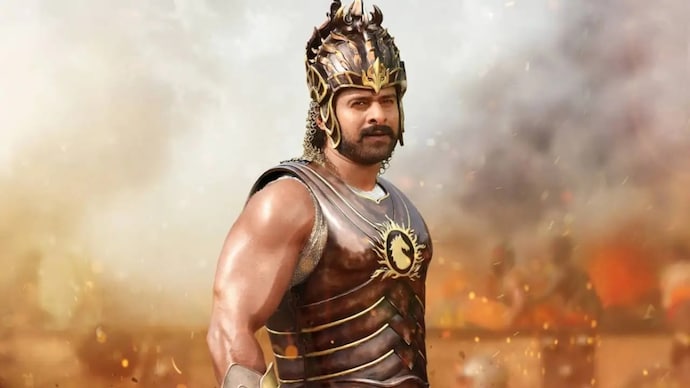

Retro Review: Baahubali (2015-17)
Starring: Prabhas, Anushka Shetty, Rana Daggubati, Tamannaah Bhatia, Satyaraj, Ramya Krishnan, Nassar
Director: SS Rajamouli
music: MM Keeravani
moral of the story: Even a righteous man can have a tragic end
Earlier this week, I watched ‘Baahubali: The Epic’ in Bengaluru. The joy of seeing again one of the greatest performances of modern cinema was diminished by a nearly empty theater. Yet, as the play unfolded, the thunderous applause, whistles and gasps of my first viewing in Jaipur in 2015 echoed clearly in my mind. A decade was blurred in bitter memories.
This time, I was less captivated by the giant waterfalls, spectacular VFX and action set-pieces and more by the vein of tragedy running through it. Throughout the 225-minute duration of the revised version, I was engrossed in Rajamouli’s fusion of two great Indian epics. Mahabharata and this Ramayana,
The similarities are striking. At its core, like the ancient stories, lies a battle for succession between cousins, driven by loyalty, betrayal and palace intrigue. Its central image, Queen Mother Sivagami (Ramya Krishnan), is a fascinating synthesis of Bhishma and Kaikeyi.
But the distance of 10 years reveals something more troubling: This isn’t just an homage to ancient stories. This is a reformulation of the Mahabharata which leads to the same tragic ending even today.
In ‘Baahubali’, Rajamouli exposes the most controversial moral failure of Indian mythology and shows us that doing the “right thing” structurally changes nothing. In his film the hero acts where the Pandavas were frozen. outcome? Anyway he was murdered. Different choices, same disaster.
This is the film’s deepest revelation: The problem was never cowardice. The problem is the state, a metaphor for the universe itself.
Sivagami Syndrome
Ramya Krishnan’s Sivagami is one of the most complex matriarchs of Indian cinema as she embodies the tragic flaws of two figures we have been taught to respect and despise.
He is Bhishma bound by oath – his word is law. Like Bhishma’s vow, his devotion to duty becomes both his strength and his destruction. She takes decisions without debate, unilaterally decides the fate of her family, watches injustice being done, paralyzed by institutional loyalty and the sanctity of her words.
When Sivagami orders Kattappa to kill Amarendra Baahubali – without any trial or evidence – we see autocracy manifested. This is not a mistake; This is the design. A person makes a decision instantly and irrevocably. His word becomes law, and law becomes murder.
She is also Kaikeyi, the trusted queen whose one decision exiles the rightful heir. Pride and ego hurt by perceived insignificance, driven by ambition (Manthara in Kaikeyi’s case, Bhallaladeva in her case), she kills the beloved son. He realizes the magnitude of his mistake too late.
Synthesis is destructive. Shivagami has the determination of Bhishma and the blindness of Kaikeyi. She is an enlightened dictator who believes in her own righteousness, wielding absolute power “for the good of the people”, never noticing that even well-intentioned tyranny leads to tyranny.
Nevertheless, he attains salvation due to a heroic death. Unlike Bhishma, he is not condemned to lie on a bed of arrows. But salvation cannot undo the murder he ordered.
Kattappa: The Tragedy of Slavery
Sathyaraj’s Kattappa may be the film’s most heartbreaking character, because his tragedy is structural, not personal.
He has to kill the person he loves most. He must backstab the man who treated him like a friend rather than a slave – because “the Queen Mother’s word is law.”
“Why did Kattappa kill Baahubali?” This became the question that drew audiences back to theaters for the second film. But the more important question is: why should Kattappa kill someone he has been ordered to kill?

He embodies the most painful aspect of both epics: loyalty as a prison. Like Bhishma, one is bound to serve the throne, no matter who sits on it or what orders they give. Like Hanuman, his complete devotion is also complete surrender.
But the film doesn’t fully address the question it raises: Is Kattappa’s loyalty a noble one?
Draupadi Reforms
The film’s strongest scene takes place not in battle but in court. Devasena – the warrior princess, Amarendra’s wife – is humiliated before the throne of Sivagami. She has been “gifted” like property, her dignity trampled by protocol. Later, in chains, he is charged with protecting the Dharma. Every Indian audience recognizes the echoes of MahabharataSaddest incident: Insult of Draupadi in Kaurava court.
In the ancient tale, Yudhishthira gambled with him – did he even have the right to do so? Bhima becomes angry but is unable to take action; Arjun hesitates; The elders justify their silence through the shortcomings of religion. They argue, argue and ultimately make it fail. Only divine intervention saves Draupadi – not the courage of her husbands.
Rajamouli raises the old question anew: What should he have done? His answer is firm. When Devasena is insulted, Baahubali does not remain silent. He works. He disregards authority, consequences, and protocol – choosing his dignity over the throne, honor over obedience, love over the law. He stands up to his mother by renouncing the crown, kingdom and identity in one breath. This should have happened in Hastinapur.
But, could he escape the fate of the Pandavas? Here, the hero acts – and righteousness wins in that moment. But the system still kills him.
the fix that changes nothing
Here lies the film’s most troubling insight: both choices – disobedience and obedience – lead to ruin. The law destroys righteousness without regard to works. Amarendra does what the Pandavas could not, and dies for it. Rajamouli’s grand reformation, for the opposite reasons, failed spectacularly.
Thinking about it years later, we realize what Rajamouli has done. Perhaps without fully intending to, he has conducted a controlled experiment on cinema. Mahabharata,
The conclusion is frightening: the fault was never in the men, but in the structure that binds them. Karma gives no guarantees. Even the righteous perish. Because in the final calculation, life does not belong to the moral order, but to chance, cruelty, and luck.
Returning to that empty theater in Bengaluru, I realized what this decade had revealed.
The spectacle dazzles, then fades. The packed halls of 2015, brimming with collective experience, are now a memory. The technical achievements – waterfall sequences, battle scenes, stunning sets, visual effects that put Indian cinema on the global map – have been transcended or subsumed into genre convention.
But ethical questions remain. They are not ancient. They are still relevant.