



Does Sutlej promote pro-Khalistan narrative? What Diljit Dosanjh’s film really says
Amidst all the debate over Khalistan, Sutlej asks a very different question. Honey Trehan’s film refuses to debate ideology, instead choosing to confront the unresolved human costs of Punjab’s years of counter-insurgency and the accountability they continue to demand.
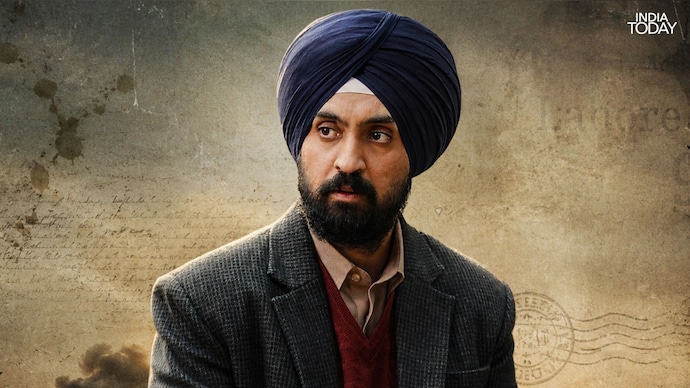

in honey trehan SatlujThe story of Punjab’s insurgency years is told from a new, largely less-acknowledged and far more intimate angle. It is not told through terrorism, the conversation around Khalistan, the aftermath of Operation Blue Star or the 1984 anti-Sikh riots. It is told and remembered through missing sons, unidentified cremation grounds, unidentified bodies, and a lingering atmosphere of fear and silence. which makes Satluj Such a personal watch.
❮❯
Starring Diljit Dosanjh as the famous artist Human rights activist Jaswant Singh KhalraThe film never loses its focus by trying to be something else. It is never concerned with becoming a political weapon or answering broader questions related to Punjab’s long history of terrorism.
Throughout its two-hour and 43-minute run, Satluj One question revolving again and again is: Who will take accountability for extrajudicial killings in the state? Who will tell the families of those who went missing that they never disappeared, but were killed? Who will differentiate between terrorists and civilians whose bodies were cremated illegally?
Satluj There is no hesitation in establishing that the 1995 counter-insurgency period is one of the darkest chapters in the history of Punjab. It also mentions the 1984 anti-Sikh riots and the assassination of Punjab Chief Minister Beant Singh. But every time it gives viewers a glimpse of where it all began, it begs a bigger question: where did it go afterward?
characteristic of a scene Arjun Rampal’s CBI officer Samundra Singh and Suvinder Vicky SSP Surjit Singh Suga Captures the situation of the film best. Faced with allegations of thousands of abductions and extrajudicial killings carried out during the counter-insurgency years in Punjab, Suga immediately turns the conversation to the 1984 anti-Sikh riots. He questioned Singh about the Sikh killings in Trilokpuri, Delhi, asking whether those deaths were “judicial or extrajudicial”, and suggested that the truth about 1984 was still buried.
Then Singh quietly takes the debate forward: “Counting Chaurasi (1984) won’t change ’95 figures(Referring to 1984 will not change the reality of 1995).
The issue is not to dismiss 1984 or minimize the trauma of the anti-Sikh riots. Rather, it is a refusal to let one historical tragedy become a justification for avoiding another. In fact, Singh is telling Suga that the scale of violence in 1984 cannot be reduced to explain or account for the thousands of alleged killings and disappearances that took place during the counter-insurgency years.
That scene is important in establishing how Satluj Never tries to be a Khalistani supporter; Its intention lies in presenting a bigger picture which risks being diluted if diverted towards other political debates. By not making Khalistan its central theme, it refers to the insurgency merely as the setting, and creates an environment in which its characters are forced to confront the weight of the times in which they live.
The film is not presented as an attempt to dismiss 1984 or minimize the trauma of the anti-Sikh riots. This challenges a pattern that is commonly visible to anyone keeping an eye on Punjab’s political discourse: the tendency to respond to one historical tragedy by imposing another, often with no one fully confronting it on its own terms.
As the same scene continues, Samudra Singh bluntly demands accountability from Suga for killing thousands of people in the name of a counter-insurgency program – which the film itself demands repeatedly: “an account will have to be given“(There has to be accountability).
The visuals show Suga saying that Punjab has a complicated history. Referring to militancy in the state, he says,The account of Punjab is very complex. We are fighting those who are not captured, only killed. These are the people for whom the army has to be called to kill. the hat falls short” (Punjab’s account is complex. We are fighting people who are never caught, only killed. These are the people you have to call the army to fight. Even artillery is not enough).
No mention of khalistanSeparatism or the demand for a separate Sikh homeland never ceases to be the ideological focus of the film. he is Sutlej’This is the most conscious narrative decision. The film acknowledges that it is set during the Punjab insurgency years. However, Trehan keeps changing The camera moves away from ideology and toward results. Politics remains in the background, while the human costs remain in the foreground.
During its entire runtime, Satluj They seem to be less interested in asking why extremism emerged than in asking what happened when the state responded to it. This is a film about records, affidavits, police registers, cremation logs and families waiting for someone who will never return home. Its emotional vocabulary is built around deprivation and mourning rather than political struggle.

Popular culture has often viewed Punjab’s years of insurgency through binaries: terrorists versus patriots, police versus terrorists, state versus separatists. Satluj contradicts this familiar narrative. Rather than attempting a comprehensive history, it deliberately narrows its approach, choosing to stick to a documentary human rights investigation rather than trying to be a definitive account of the entire political movement.
That’s why Khalra’s work becomes a perfect lens to tell this story.
Khalra was not investigating the politics of Khalistan. He was investigating allegations that thousands of unidentified bodies were cremated illegally and that countless families were never told what happened to their loved ones. In this film the hero does not use weapons; He keeps the documents. Their fight is not against an ideology, but against extinction itself – against the extinction of bodies, identities, and official memory-making. Satluj Politically compelling in a completely different way.
Satluj This is a film less about extremism but about documentation. It argues that before history can be debated, it must first be recorded.
Democracies often argue that extraordinary circumstances require extraordinary powers. Human rights defenders argue that those powers cannot exist without accountability. Satluj Establishes itself precisely within that tension.
Whether every viewer accepts that distinction is a different matter entirely. Given Punjab’s deeply conflicted political history, any attempt to revisit the insurgency years is almost certain to be viewed through the current ideological lens. For some people, this film may reopen old wounds. For others, it may represent a long-standing conversation about justice that never quite came to fruition.
But what Satluj Ultimately being left behind is no argument for Khalistan. It leaves a constant reminder that history is remembered not only through battles won or lost, but also through those who disappeared without a trace, and who spent years asking where they went.
Satluj Was streaming on ZEE5. However, the film was pulled within 48 hours of its release.