



Irish playwright George Bernard Shaw, along with American songwriter Bob Dylan, are the only two people to achieve literary and cinematic harmony: winning both a Nobel and an Oscar. Bernard Shaw won the Nobel for the screenplay Pygmalion, which was made into a film and was credited with taking Hollywood from illiteracy to literacy. Bernard Shaw claimed that he hated this award, although this did not stop him from keeping it on his mantelpiece. Pygmalion was later remade as My Fair Lady and became a cultural landmark of the metamorphosis, held up as proof that speaking proper English could solve all the world’s problems.For all the non-Macaulayputs here, My Fair Lady is a musical film about a phonetics professor named Professor Henry Higgins who believes he can teach a flower girl named Eliza Doolittle to speak English ‘properly’ so she can pass at Royal Ascot.While he is almost ready to give up, Professor Higgins delivers one of the film’s most quotable lines and the finest Albion promotion:“I know your head aches. I know you’re tired. I know your nerves are as raw as meat in a butcher’s window. But think of what you are trying to accomplish—just think of what you are dealing with. The majesty and grandeur of the English language; it is the greatest asset we have. The best thoughts that flow into men’s hearts are contained in its extraordinary, imaginative, and musical mixture of sounds. And that’s it Win for which you have prepared yourself, Eliza. And you will win it.”
The above assumption is a clear example of what one calls the Higgins-Macaulay Complex, a colonial mindset, which assumes that anyone who speaks or writes English properly is inherently superior, and an obvious choice for anyone who possesses any solid skills.It is clearly derived from Henry Higgins’s belief that English is the language of noble ideas and Macaulay’s belief that a single shelf of European literature is more valuable than the entire native literature of India and Arabia.This notion survives in post-colonial society, where English – and those who have access to it – is a symbol of civility and civility. The Higgins–Macaulay complex continues to haunt post-colonial societies, but the English language can be strangely prescient at times.
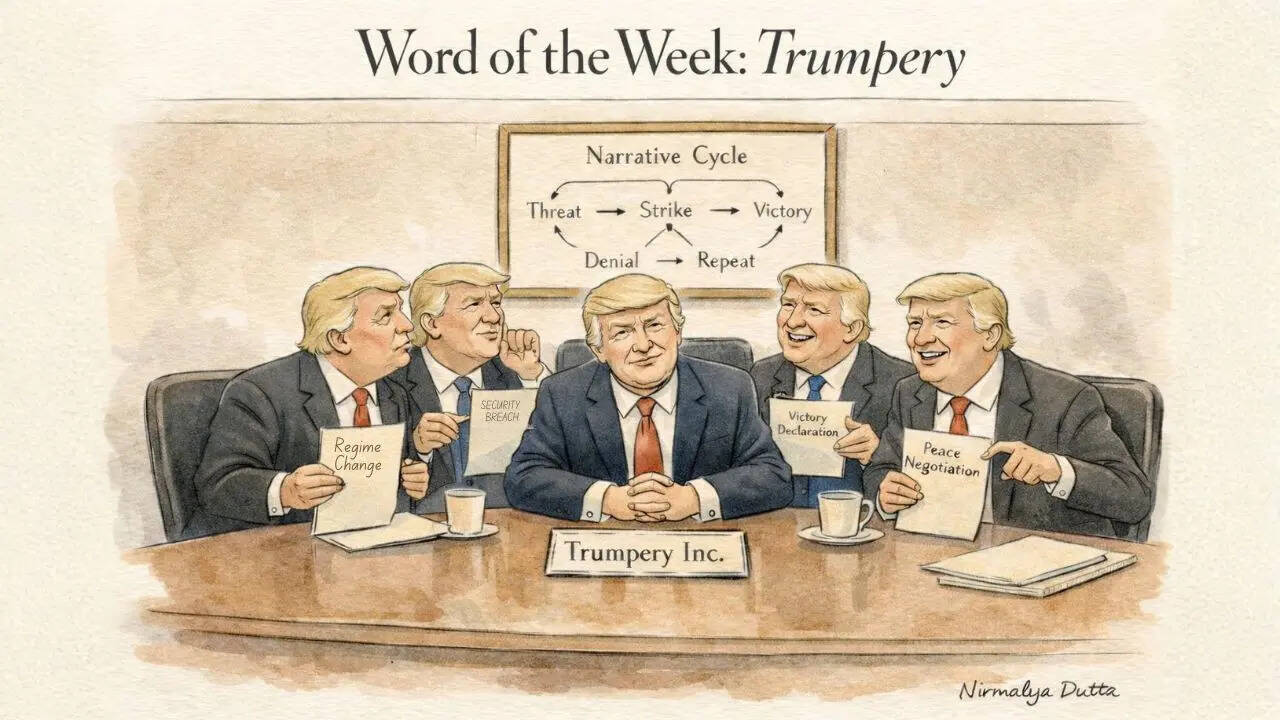
Take the Old Middle English word trumpery.The word first appeared in English in the mid-15th century, derived from the Middle French tromper (to deceive), and originally meant “deceit, fraud, or trickery” and later evolved to describe “attractive but worthless objects, nonsense, or worthless nonsense”.In a delightful article titled Trumpery and Social Darwinism for National Review in 2016, MD Aeschliman noted that Samuel Johnson, while writing in A Dictionary of the English Language, defined Trumpery as “something deceptively brilliant; something of less value than it seems.”He writes: “This is an ideal place to start, because Johnson’s definition reminds us of the broader fact that Trump’s vulgar grandeur is based on virtually continuous rational, rhetorical, and moral fallacies. Dr. Johnson’s predecessor Alexander Pope, who was widely read in the American colonies before the War of Independence, said that the rational man must always distinguish between ‘concrete value’ and ’empty display’: again, the perfect test for Trumpery, which is a Based on massive trompe l’oeil fraud, widespread, immoral fraud and demagoguery.“Calling Trump Nietzschean and post-Christian – Nietzsche had ‘killed’ the Christian God – Aeschliman argued that Trump’s worldview was shaped by social Darwinism, based on Charles Darwin’s evolution, which assimilated the notion of survival of the fittest, and reflected a deep civilizational and cultural decline. That worldview was not the obscenity of any one person, but the credo of Western civilization, which saw the world through the prism of winners and losers, considered success a moral vindication, had an aversion to weakness, and considered naked power a more important virtue than any pretense of principle.Of course, this was 10 years ago when Trump was largely banned and was only creating chaos on Twitter feeds. Ten years later, Trump is an unbridled id, wreaking havoc around the world after returning from political exile and now seems intent on making everyone else pay for the gap.Take the war on Iran, which is trumpeted in its fullest historical and literal sense. No one knows why America and Israel chose this right time to attack Iran, kill the elderly Supreme Ayatollah, and throw the world into chaos. Various vague reasons have made their way into the public discussion – including on-record statements from the White House, off-record moans from the White House and unfiltered outbursts from Truth Social – none of which have provided adequate answers.

This is Schrödinger’s first true war: one that continues even when Trump has already won. So far, the various hypotheses have been more ridiculous than the last. The first was regime change which has not happened, and Iran’s enemies clearly underestimated the power of the IRGC in Iranian society. The second one has been wanting Iran’s oil. Trump has also used historical framing, including the 1979 mortgage crisis, to justify actions. Aides have argued that it was a pre-emptive act of self-defense. Or to stop Iran from acquiring nuclear weapons. That Israel was going to attack anyway.That this is God’s will. Overall, no one still has a clear answer, nor do we think we will.So, let’s try to give a different answer: Is Donald Trump living up to his name’s words, Trumpery, or has his name always dictated his actions?There is a Latin term called nomen omen which means that a person’s name is a sign or omen of a person’s fate, character or destiny. He will have to live up to his name. The second aspect of this idea, which brings causality into the picture, is nominal determinism, the hypothesis that people are attracted to jobs or fields that correspond to their names. One must live up to the name, or one must live up to the name as it was used to them.The term nomological determinism was first used in the magazine New Scientist in 1994, when the magazine’s Feedback column mentioned several scientific studies conducted by researchers with the same name (a book on polar exploration by Snowman and an article on urology by Splat and Weeden). The idea is a bit older and was first suggested by Carl Jung to describe Sigmund Freud, whose surname means ‘pleasure’, although many critics of Freud’s pop psychology might argue that the phonetic English version of his name is closer to Freud’s surname.One explanation hypothesized for nominal determinism is implicit egoism, which states that humans have an unconscious preference for things they associate with themselves.But in the long scheme of things, does it matter whether it’s nominal omen or nominal determinism?Because we are all still living in this age of Trumpery, where a moral void with declining mental abilities and a severe case of logorrhea keeps saying whatever is on his mind, whether it resembles the truth or not. All of this would be quite amusing if one man weren’t at the controls of the most destructive war machine ever built. Put this in context: When the US dropped the bombs on Hiroshima and Nagasaki, it had two weapons, each with a destructive power of about 15 to 20 kilotons. This was enough to wipe out cities and harm future generations. Today, the United States has a nuclear arsenal that makes that moment almost primitive.
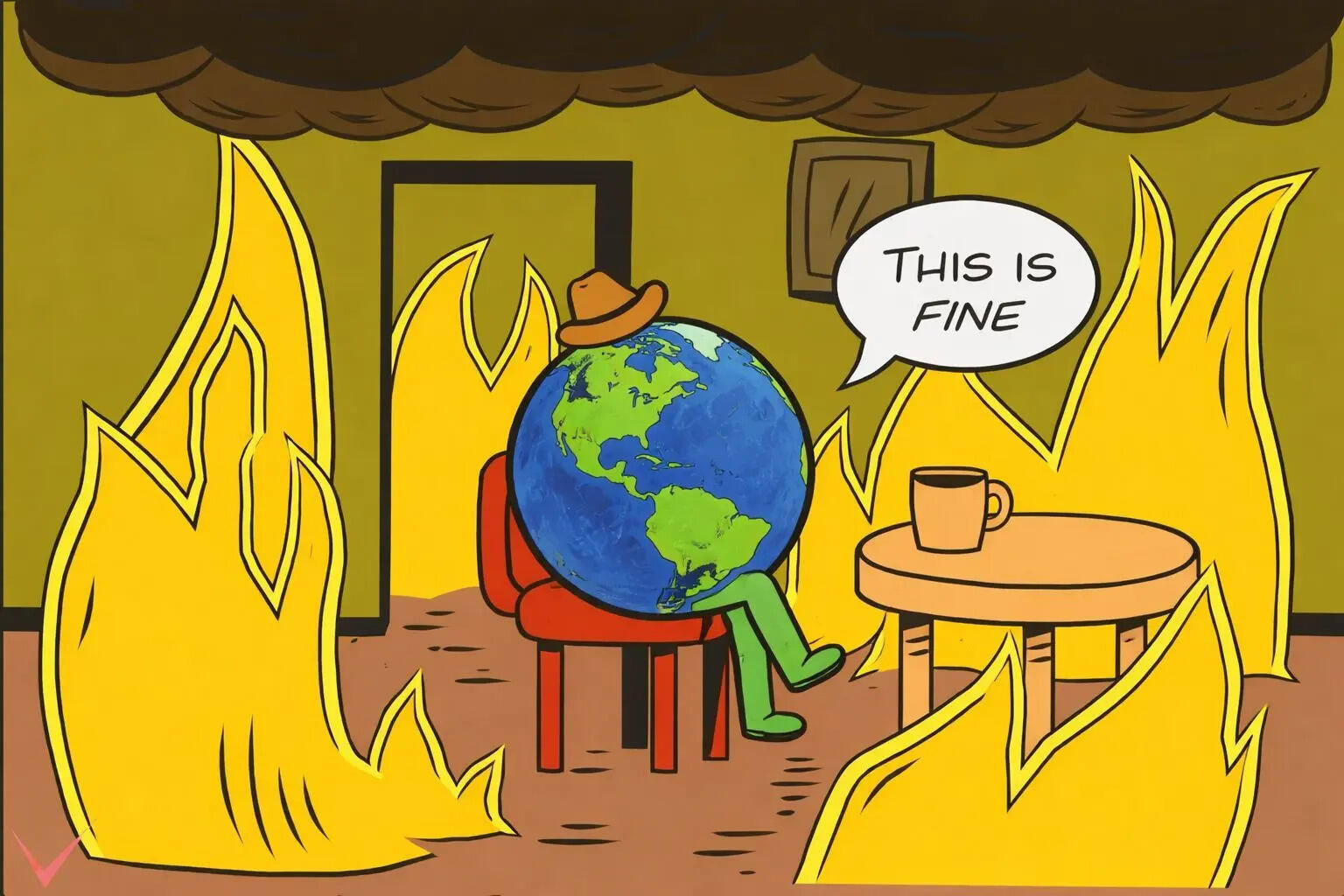
In My Fair Lady, Henry Higgins teaches Eliza proper pronunciation by repeating this sentence: In Spain it rains mostly in the plains. Now, that line is not present in Bernard Shaw’s original play. On the other hand, his Nobel-Oscar brother Bob Dylan wrote a haunting elegy for the world in A Hard Rain’s A-Gonna Fall, which many interpreted as a reference to the nuclear rain during the Cuban Missile Crisis. Dylan rejected that claim, instead referring to “a culture of feeling, of dark days, of division, of evil for evil, of a common destiny of human beings being thrown out of the way, one long funeral song”.Thanks to our current Trumpery, that funeral may happen sooner than necessary. The rains of Spain once taught us to speak. Higgins believed that language could civilize the world, one voice at a time. Now the coming rain may decide whether we will speak or not. And if it falls, it will not fall in Spain or on the plains, but everywhere at once.