



The Giza Plateau has once again attracted global attention after a group of researchers claimed that advanced radar scans had revealed a vast underground network of structures, including what some are calling a possible “second Sphinx”.This theory, inspired by satellite-based imaging and detailed subsurface mapping, suggests the presence of geometric structures, deep chambers and interconnected pathways hidden beneath the sand. The idea has quickly gone viral, combining cutting-edge technology with ancient mystery, and rekindling long-standing questions about what may still lie undiscovered beneath one of the world’s most iconic archaeological landscapes.
which prompts inside the scan Second Sphinx at Giza
This theory comes from the Khafre Research Project, led by Corrado Malanga, Filippo Biondi, and Armando Mei.Using synthetic aperture radar (SAR) Doppler tomography, the team analyzed how radar signals interact with the ground to create a layered, three-dimensional model of what lies beneath the surface. Their approach focuses on detecting subtle variations and patterns that may indicate structured structures rather than natural geology.According to Filippo Biondi, “Our geophysical surveys have revealed organized structures and deep chambers that point to a level of complexity beneath Giza that has not been fully explored.”Researchers have described a fascinating underground landscape beneath the Great Sphinx of Giza and the surrounding pyramids. Their findings suggest the presence of vertical shafts, spiral-like pathways, and large chambers located beneath the surface, which appear to be a coordinated structural network.In this context, the idea of a “second Sphinx” emerges not as a fully exposed monument, but as a mirror or sphinx-like structure revealed in the data, which aligns with the geometry of the existing Sphinx. Scans also indicate column-like structures and symmetrical layouts that some interpret as signs of deliberate design.The team’s analysis points to features beneath Khafre’s pyramid, including interconnected structures that span significant parts of the plateau, suggesting that what lies underground may be more extensive than previously thought.
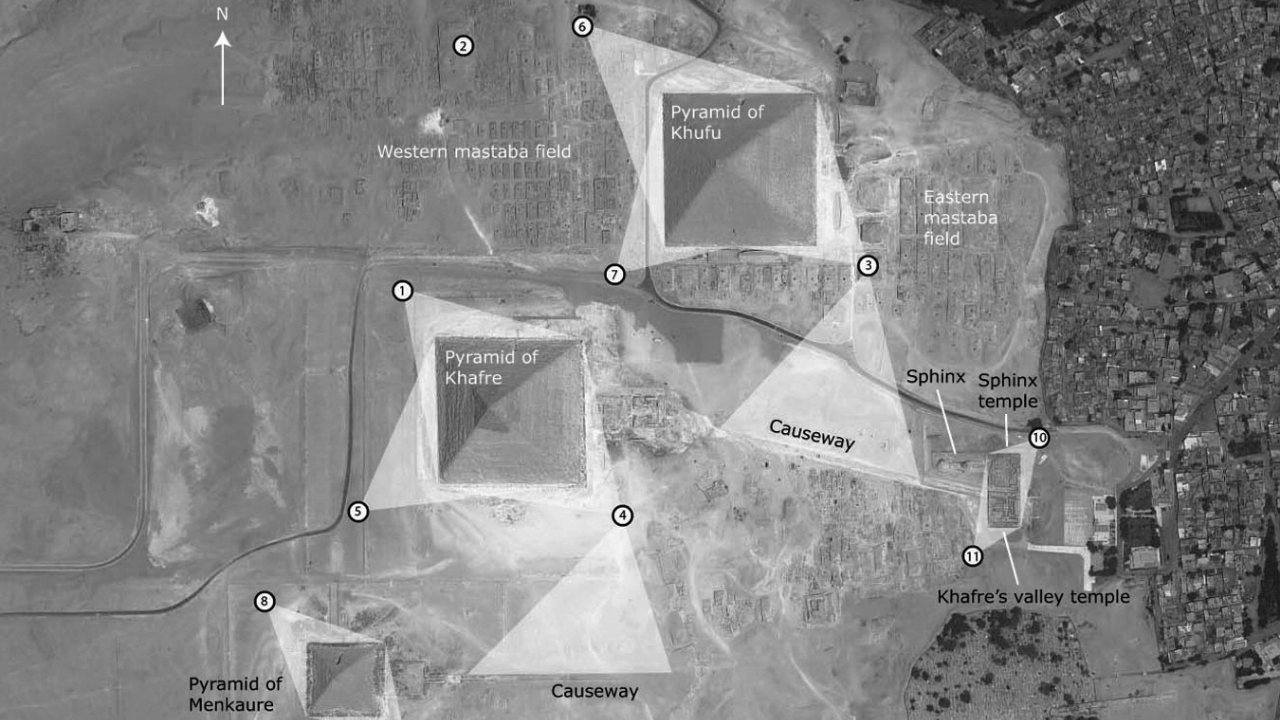
Annotated aerial view of the Giza Plateau with the Pyramids and the Sphinx.
Ancient Echoes and Enduring Principles
The possibility of hidden chambers beneath Giza has long been linked to ancient accounts and iconographic texts. The Greek historian Herodotus once described a vast Egyptian labyrinth containing thousands of rooms, some of which were underground, leading to centuries of speculation about lost structures.Ancient Egyptian texts such as the Book of the Dead also speak of layered realms beneath the earth, often interpreted symbolically but sometimes linked to physical locations in later theories. These ideas have evolved into modern interpretations such as the “Hall of Records”, which some believe to be a mythological repository located beneath the Sphinx or the pyramid.New radar findings have revived these narratives, giving them a technological dimension that fascinates both researchers and the public.
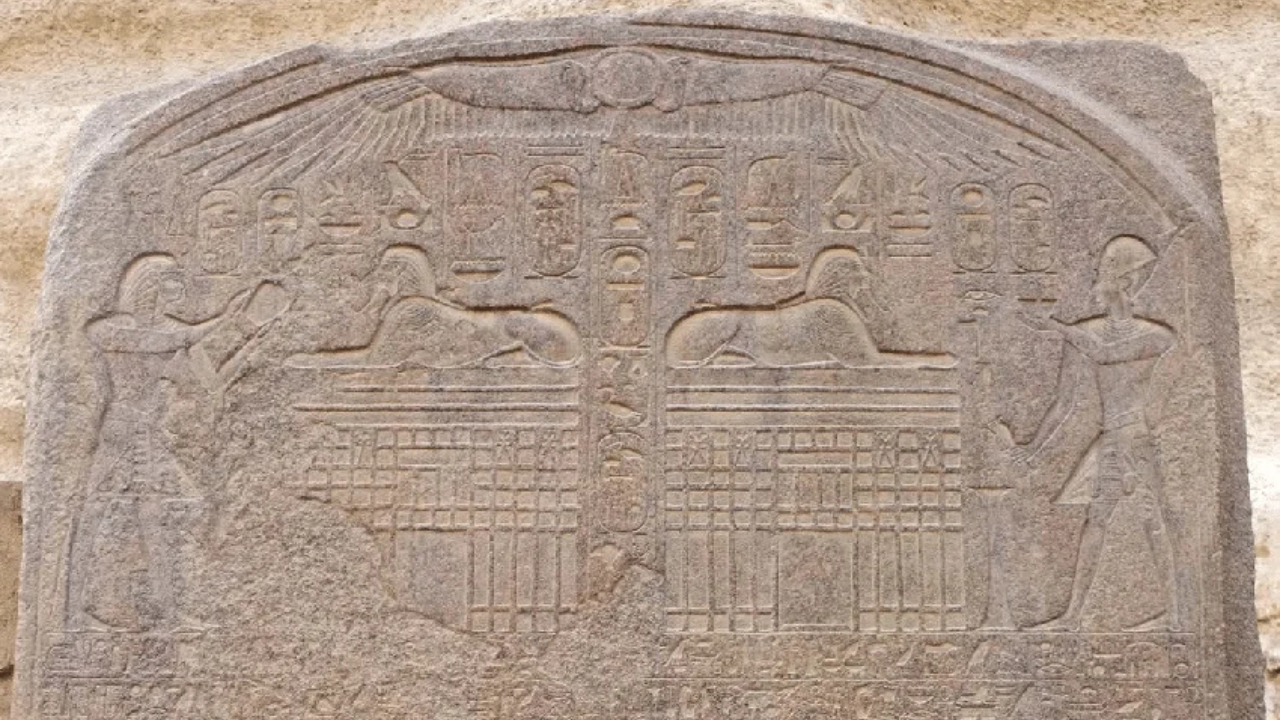
Relevant section of the Dream Stele of Thutmose IV (circa 1400 BC), showing the “palace facade” beneath the Sphinx. Photo: RMS and Catherine Ulissey (2015).

A debate that continues to grow
The claims have sparked intense discussion in the scientific and archaeological communities. While some researchers see the patterns as interesting evidence of unknown complexity beneath Giza, others urge caution in interpreting the subsurface data.Prominent Egyptologist Zahi Hawass has criticized the findings, calling them inconsistent with established knowledge of the site. Similarly, radar expert Lawrence Conyers has highlighted the challenges of interpreting deep subsurface signals.Additionally, the idea has gained popularity among enthusiasts and independent researchers who see the findings as a potential breakthrough. As interest grows, the discussion reflects a broader tension between new technological possibilities and long-standing archaeological frameworks.
what lies Beneath
Modern exploration of Giza has already revealed hidden corridors and internal voids within structures such as the Great Pyramid of Giza, showing that the plateau still holds secrets. The latest claims build on that spirit of discovery, suggesting that surface monuments may represent only a fraction of a much larger, interconnected system.Whether interpreted as geological formations, ancient engineering or something that is still yet to be fully understood, the patterns found beneath Giza invite deep investigation.
big picture
The idea of the second Sphinx and the underground megastructure is based on a powerful blend of science, history and imagination. It reflects humanity’s enduring fascination with ancient Egypt and the possibility that its greatest secrets lie buried beneath the sand.As Filippo Biondi suggested, the findings open a new window into unseen layers of Giza. For now, the mystery continues to unravel, drawing global attention to what may lie beneath one of the world’s most iconic landscapes.