



Iran stepped up its attacks on oil and natural gas facilities around the Gulf on Thursday, increasing the risk of war that could send a blow to the global economy.The strikes in response to an Israeli attack on a key Iranian gas field sent fuel prices soaring and threatened to draw Iran’s Arab neighbors into direct conflict. Global supplies are already under pressure from Tehran’s targeting of energy production because of Iran’s stranglehold over the Strait of Hormuz, through which a fifth of the world’s oil is transported.
Watch

Second ship hit by missile in Gulf waters as Iran steps up attacks in retaliation for gas facility attack
Iran targeted energy facilities in Qatar, Saudi Arabia, Kuwait and the UAE. An Iranian missile attack also hit Israel’s oil refineries in the northern port city of Haifa.Underscoring the danger to ships in the region, a ship was set on fire off the coast of the United Arab Emirates and another ship was damaged near Qatar. Efforts to bypass the strait were also under pressure: an Iranian drone hit a Saudi Arabian refinery in the Red Sea, which the country was hoping to use as an alternative exit route.
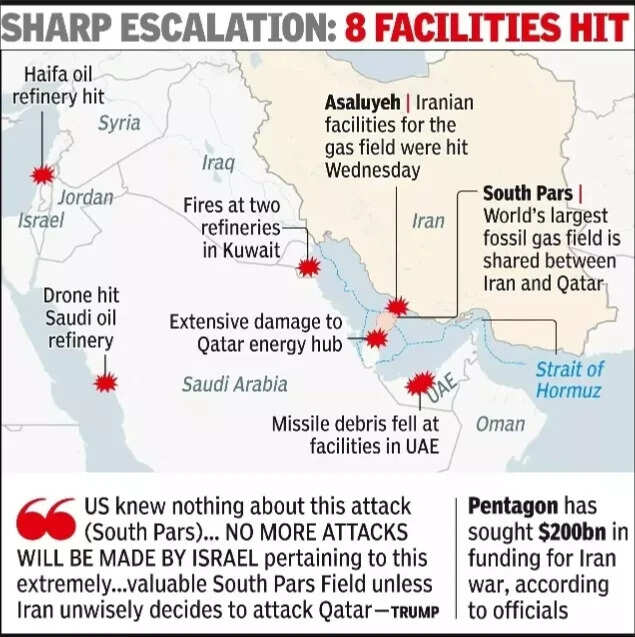
Brent crude oil, the international standard, reached $118 a barrel, up more than 60% since Israel and the US began the war. The European benchmark for natural gas prices rose 17% on Thursday and have doubled in the past month. Treasury Secretary Scott Besant said Thursday that the United States could lift sanctions on Iranian oil stuck in tankers to help increase global supply and lower prices.Qatar, Saudi Arabia and the UAE condemned the Iranian attacks. Arab League Secretary-General Ahmed Aboul Gheit called these a “dangerous escalation”.But Iran showed no signs of backing down. QatarEnergy’s CEO and minister of state for energy told Reuters the attacks have damaged 17% of Qatar’s LNG export capacity, causing an estimated $20 billion loss in annual revenue and threatening supplies to Europe and Asia. Saudi Arabia said its SAMREF refinery in the Red Sea port city of Yanbu had been affected.Iran also targeted two refineries in Kuwait and gas operations in Abu Dhabi, local officials said. In Israel, more than a half-dozen waves of Iranian attacks targeting large parts of the country sent millions of people into shelters. The attacks caused damage to buildings. An Iranian missile attack hit Israel’s oil refineries in the northern port city of Haifa but did not cause “significant damage,” Israel’s energy ministry said Thursday.In Washington, Defense Secretary Pete Hegseth told reporters that the US military “controls the destiny” of Iran. “Iran has the ability to make the right choice,” he said. He further said that Tehran should not “go further and target Arab allies, Arab countries, that are trying to cause pain, pain that they themselves have caused.”Israel said on Thursday it struck Iranian targets in the Caspian Sea for the first time. Israeli military spokesman Lieutenant Colonel Nadav Shoshani said the strikes hit dozens of targets, including ships, a shipyard and a command center.The Trump administration has cited various war objectives, including reducing Iran’s missile capabilities. Hegseth said Thursday that more leaders could be targeted, specifically mentioning the IRGC and the Basij force, whose leader was killed by Israel earlier this week. “The last job anyone in the world wants right now is senior IRGC or Basij leaders, temporary jobs, all of that,” Hegseth said.