


The new Vivo V70 retains some of the best features of the V60 while also bringing in some changes that you might appreciate. Here’s what’s new and what stays the same.
The V70 now features a flat 6.59″ OLED display (1,260 x 2,750px), replacing the quad-curved 6.77″ panel of the previous model. The display is brighter, with a maximum global brightness of 1,800 nits and a maximum local brightness of 5,000 nits (compared to 1,500 nits global and 5,000 nits local). As before, it is a 10-bit panel with a 120Hz refresh rate.
One significant upgrade is the switch to an ultrasonic fingerprint reader, which is faster, more reliable, and more secure than the older optical reader.

The smaller screen diagonal helps make the phone look narrower. It is now 74.3 mm wide compared to the V60’s 77.0 mm. It’s slightly thinner at 7.4mm/7.6mm (depending on color, vs 7.5mm/7.8mm) and lighter at 187g/194g (vs 192g/201g).

Despite being thinner, the V70 is just as stiff as the V60, if not more so. It has been given IP68 and IP69 ratings for dust, water and water jet resistance. It has also been drop-tested from 1.8 meters. The display is protected by Schott Xensation Core glass.
The new model replaces the old plastic chassis with a durable 6-series aluminum alloy frame. It has gone through several polishing stages to achieve its final form.
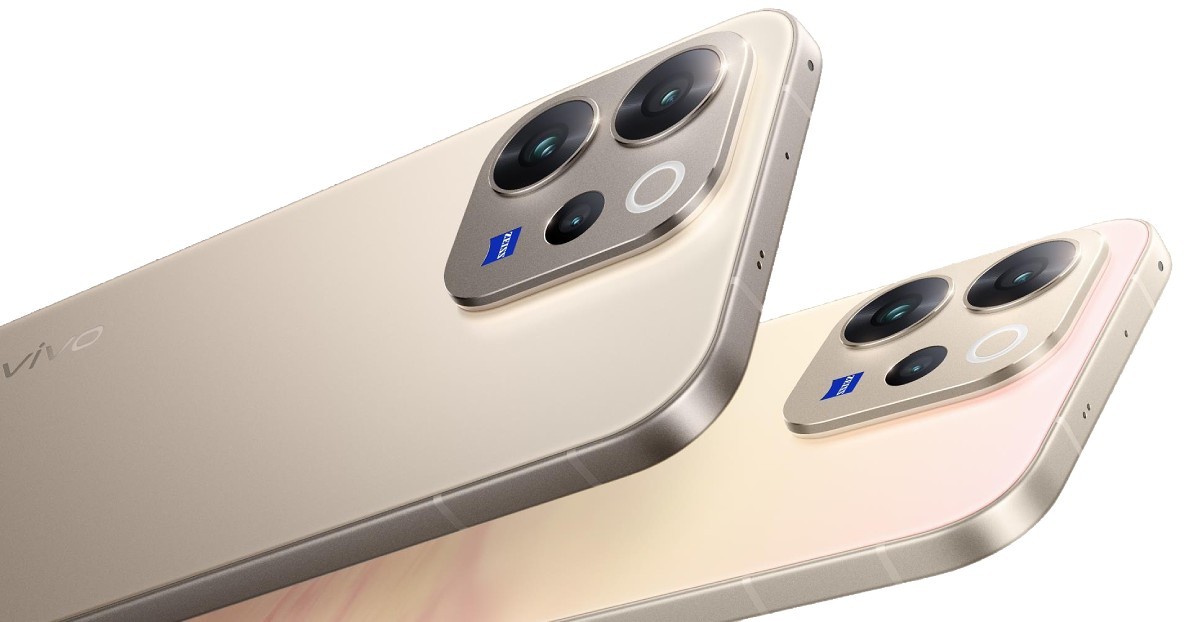
The V70 features Vivo’s semi-solid battery technology. It has the same 6,500mAh capacity as before, which is enough to play 11 hours of PUBG or record 5 hours of 4K video at 60fps (that’s another upgrade, but we’ll get to the camera). The battery can be used in extreme temperatures – if you’re in the desert, it can run Google Maps for up to 10 hours at 40°C (104°F), or if you’re in the Arctic, it can run Maps for up to 8 hours at -20°C (-4°F). The phone supports 90W fast wired charging (Vivo’s FlashCharge).
The Vivo V70 is equipped with a 50MP main camera with OIS, which now uses a Sony LYT 700V sensor (1/1.56″). It is joined by a 50MP telephoto lens (1/1.95″) and an 8MP ultra-wide. As we mentioned above, the phone can record 4K video at 60fps (up from 4K at 30fps on the V60).
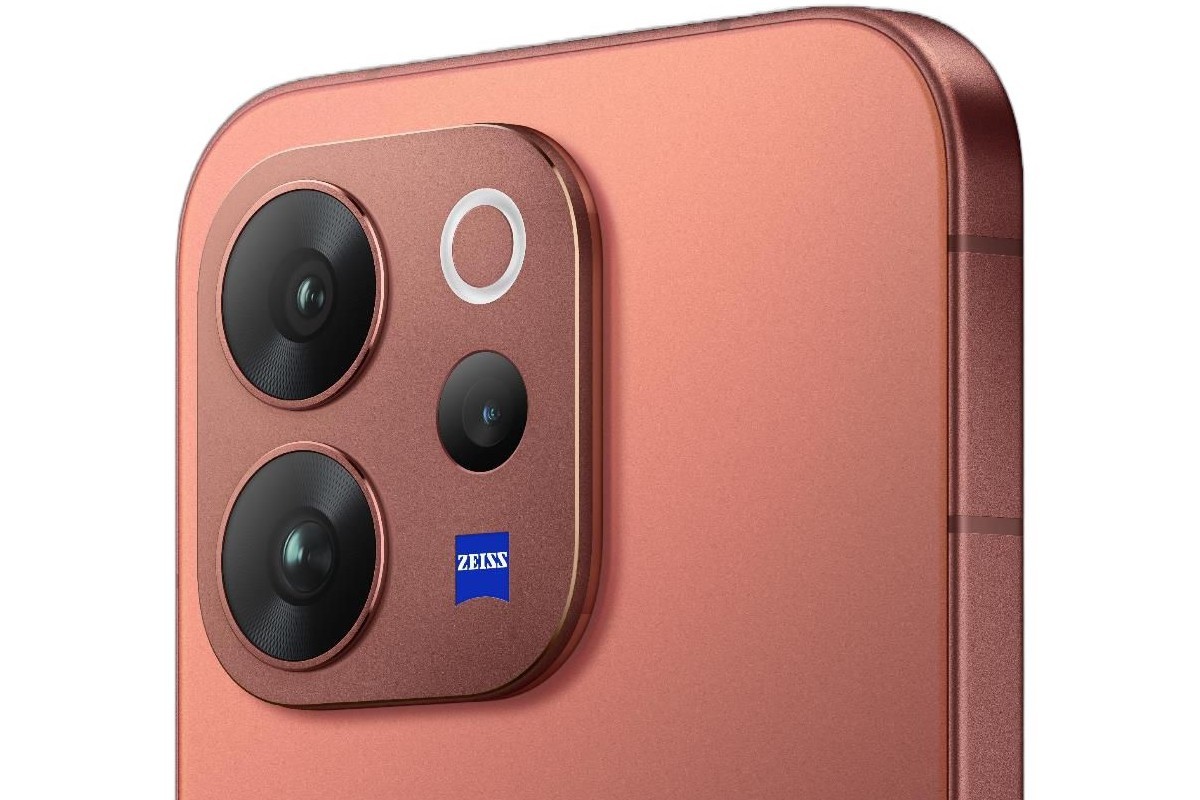
The main and tele cameras offer five popular focal lengths for portraits: 1x/23 mm (landscape portrait), 1.5x/35 mm (street portrait), 2.2x/50 mm (classic), 3.7x/85 mm and 4.3x/100 mm (close-up). There’s also a selection of ZEISS-style Bokeh modes to choose from.

The phone is available in Authentic Black (this is the slim and light version) as well as Canary Yellow, Alpine Grey, and Sandalwood Brown. It launches with Android 16/OriginOS 6 and will receive up to 6 years of OS updates and security patches (the V60 got 6 years of patches but only 4 years of OS updates).
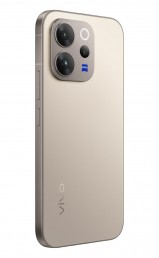
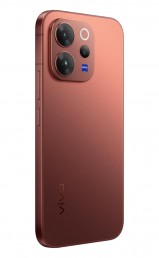
Vivo V70 in: Authentic Black • Canary Yellow • Alpine Gray • Sandalwood Brown
There is no change in the chipset, the phone is powered by the same Snapdragon 7 Gen 4 chip as its predecessor. It can be configured with 8/12GB RAM and 256/512GB storage. Connectivity includes dual-band Wi-Fi, Bluetooth 5.4, and USB 2.0.
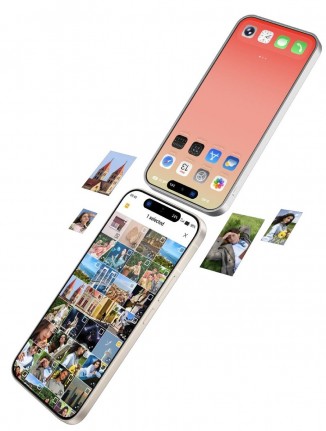
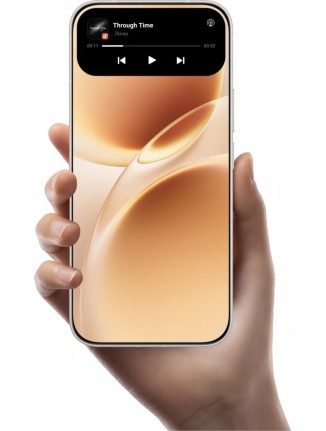
Vivo V70 launched with OriginOS 6
Vivo V70 will soon be available in Europe, the Middle East, and Southeast Asia. Pricing details follow.
Vivo V60 5G
| 128gb 8gb ram | ₹ 36,999 |
|
| 256GB 8GB RAM | ₹ 33,198 |
|
| Show all prices | ||