


India Today AI Summit 2026: ‘MPs don’t care about our privacy, the responsibility is on citizens’
Speakers at the India Today AI Summit 2026 warned that the rapid adoption of AI in India is leaving privacy protections behind, leaving individuals responsible for the security of their data. Panelists said that due to weak enforcement and delayed laws, lawmakers and companies are failing to keep up.
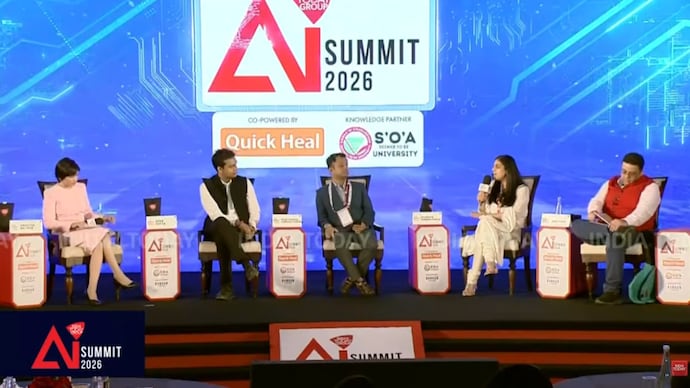

The discussion on artificial intelligence at the India Today AI Summit 2026 was dominated by concerns that India’s political and corporate systems are unprepared to meaningfully protect personal data, with speakers warning that citizens are increasingly being left to fend for themselves as AI systems spread across the economy and state.
Nikhil Pahwa, founder of MediaNama, said that users should not expect meaningful intervention from institutions when it comes to privacy protection.
“Frankly, I don’t think lawmakers do that. I don’t think the companies whose apps we use do that, so it’s on us,” he said, arguing that awareness is now the only realistic defense against uncontrolled data collection.
Pahwa warned that data hunger has grown as AI spreads, with apps and platforms collecting more personal information to train models. Users often fail to realize, he said, that sharing access with AI tools exposes not only their own data, but also the information of those with whom they interact. He said that once the data is fed into the AI system, it cannot be reversed.
“Once the data is processed and a language model is trained, it is impossible to undo,” he said.
weak law, strong system
Apar Gupta, founder and director of the Internet Freedom Foundation, said India’s legal protections have not kept pace with the deployment of AI, especially in government systems. He said artificial intelligence was already being used in welfare and policing, where failures could result in denial of services or loss of liberty.

India’s Digital Personal Data Protection Act is not yet effective, Gupta said, and yet publicly available personal data is kept out of its scope. “So, according to me, pretty much the only protection we have currently is from these AI systems, which are getting better, the more information they pull from the user, which, again, could be a part of the retraining of that data, is contract based,” he said.
Gupta argued that relying on technological safeguards without enforceable legal oversight is risky, especially when AI is deployed by the state. Transparency about how such systems are built, trained and audited is essential, he said, warning that technology with the power to “grant and deny” should be governed by law rather than trust.
The speakers basically took a look at India’s AI trajectory, which is being adopted rapidly with limited accountability. As AI systems become more deeply embedded in public services and consumer platforms, speakers said the burden of protecting privacy is shifting from lawmakers and companies to citizens themselves.