


After calling India a disappointment, OpenAI CEO Sam Altman says it has the potential to become an AI leader
As India prepares to host a major global AI summit, OpenAI chief Sam Altman says the country has the people, scale and ambitions needed to build artificial intelligence, not just use it.
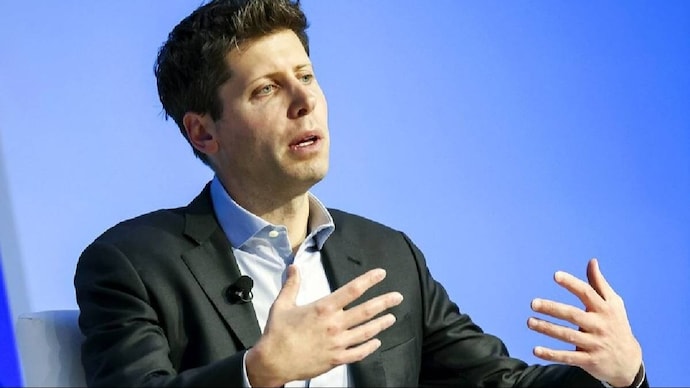

As New Delhi prepares to host the India AI Impact Summit, OpenAI chief Sam Altman has put India at the center of the global conversation about who will really build the next wave of artificial intelligence. In comments released ahead of the summit, Altman said India could emerge as a “full-stack AI leader”, a vision that puts the country in line with countries that are not only using AI tools but also building the systems behind them, TOI reports. Interestingly, the latest comment comes just a few years after he described India as disappointing in building AI systems.
At the time, Sam Altman was answering a question about whether small, independent teams in India could realistically build large, competitive AI models. His blunt answer in 2023 – that such efforts were “completely hopeless” – quickly followed, drawing backlash from founders and users in general, who argued that the country’s scale, talent pool and cost advantages were being ignored. Now, just ahead of the India AI Summit next week, Altman’s latest comments point to a clear change in tone. By describing India as a potential full-stack AI leader, he not only acknowledges its role as a user of global AI tools but also its growing ambition to build core models, infrastructure and applications at home.
This statement is a moment of confidence for India. From classrooms and startups to non-profits and small businesses, AI tools are spreading rapidly across the country. For OpenAI, India has now gone from being an experiment market to one of its most important user bases.
It has become impossible for top AI companies to ignore India
Altman said India is now OpenAI’s second-largest market in terms of users, behind only the United States. He said about 100 million people in the country use OpenAI’s tools every week, with students forming the largest group globally on ChatGPTT. India also ranks among the top countries using the company’s free research and collaboration tool Prism.
“OpenAI is committed to playing its part in helping build AI in India, with India, and for India,” Altman wrote. He said the company has kept many of its tools free so that access is not limited by income, education or technical background.
That effort has already deepened grassroots engagement. OpenAI recently trained more than 200 nonprofit leaders in four Indian cities on how to use ChatGPT to improve their work. The company opened its first office in Delhi last year and plans to further expand its presence in 2026. Altman confirmed he would visit India next week and said new partnerships with the government would be announced soon.
A test of ambition and implementation
Altman laid out a simple framework for how AI can actually help people. He said the tools should be available, used in everyday settings and paired with confidence for decision making. “When these three are aligned, more people can participate not only as users of AI, but also as builders and beneficiaries of the development enabled by it,” he said.

The Indian government is trying to create those conditions through the IndiaAI Mission, which aims to build computing capacity, support startups, and promote the use of AI in public services like healthcare and agriculture. Altman said India understands that AI should be used not just for high-level demos but also to create practical solutions.
He also highlighted the risks. One concern is what he calls “capability excess,” which is the gap between access to AI tools and the skills needed to use them well. To bridge that gap, Altman calls for large-scale AI education, focusing on real skills in coding, research, and knowledge work. He said long-term investments in computing power and energy will decide which countries will be ahead.
“AI will help define the future of India and India will help define the future of AI,” Altman said.
Global policymakers and technology leaders are expected to attend the India AI Impact Summit to be held from February 16 to 20 at the Bharat Mandapam. According to Nvidia, one notable absence will be Jensen Huang, whose trip was canceled due to unexpected circumstances. You can stay connected with India Today for all the latest updates.