



Nothing CEO Carl Pei Says Be Prepared to Pay More for Phones in 2026, There’s No Other Option
Nothing CEO Carl Pei has warned that rising component costs will drive up smartphone prices from 2026, leaving brands little room to keep phones affordable. The same is true for the nothing phone.


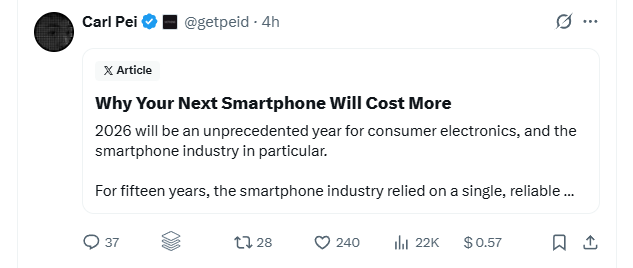
Over the years, smartphone buyers have become accustomed to a predictable pattern. Each new model brought better performance, more storage, and better features, often without a huge jump in price. According to Nothing CEO Carl Pei, that comfort is about to end. In a detailed post on X, Pei warned that 2026 will be a difficult year for the smartphone industry, with rising costs making higher phone prices almost inevitable.
Pei pointed out that the industry is facing a change it has not faced in more than a decade. Smartphone makers have long relied on falling prices of components, especially memory and displays, to keep phones affordable while improving hardware every year. This perception is no longer true, he said.
Nothing CEO Carl Pei says AI is changing the game for smartphones
At the heart of the problem is memory. The same memory chips used in smartphones are now in huge demand from AI companies building large data centers. These companies have been lining up supplies years in advance to support the rapid development of artificial intelligence. As a result, smartphones are no longer the main priority for memory suppliers.
This increasing competition has also started showing its effect. Pei said memory prices have risen sharply, in some cases several times more, than last year. What was once a relatively small part of a phone’s total cost is rapidly turning into one of the most expensive components.
When the economics of phones stop making sense
Pei said that this change completely changes the way smartphones are priced and manufactured. If a key part that used to get cheaper every year suddenly becomes far more expensive, brands are forced to make uncomfortable decisions. They can either raise prices, sometimes by large margins, or reduce specifications to keep costs under control.

According to him, it will be difficult to maintain the popular formula of providing more facilities at lower prices. This pressure is expected to impact budget and mid-range phones the most, where margins are already thin. Pei believes some of these segments may shrink as companies struggle to balance costs and consumer expectations.
Not even phones will survive the price hike
It was also clear to Pei that nothing was untouched by these changes. He said prices are likely to increase across the company’s smartphone lineup, especially as new models move to faster storage standards like UFS 3.1. He said high-quality components now come at a much higher cost.
Pei says the phone specs race is slowing down
According to Pei, 2026 could be the point where chasing specs will stop being the main focus of the smartphone industry. As hardware becomes more expensive and harder to upgrade cheaply, user experience will matter more than raw numbers on a spec sheet.