



Sanchar Saathi controversy: Scindia calls app ‘alternative’, opposition fears spying; Apple can oppose dictatorship

In this special report, Consulting Editor Rajdeep Sardesai discusses the controversy surrounding the government’s directive to pre-install the ‘Sanchar Sathi’ app on all mobile phones. Union Minister Jyotiraditya Scindia gave clarification and said, ‘If you do not want Sanchar Sathi, you can delete it. This is optional. The opposition and privacy advocates, including lawyer Apar Gupta and Supreme Court lawyer NS Nappinai, raise concerns about the potential surveillance and compare it to ‘Pegasus 2.0’. Former Prasar Bharati CEO Shashi Shekhar Vempati and Maharashtra Principal Secretary Brijesh Singh defended the move, calling it an important step against cyber fraud. The show explores whether the app is a ‘cyber shield’ or a ‘snooping tool’ amid reports that tech giant Apple may oppose the mandate.
latest video
Special Report: Not stubble burning, but emissions from vehicles, considered the main cause of Delhi pollution.
A latest analysis by the Center for Science and Environment (CSE) shows that the main reason for Delhi’s toxic air this winter is not stubble burning but vehicular emissions. The report highlights that despite farm fires being at their lowest level for many years, pollution levels from local sources remain severe. An environmental expert points out that while the contribution of stubble burning has come down to less than 5 percent, vehicular congestion and nitrogen dioxide levels have increased. The discussion calls for an immediate, detailed plan to upgrade public transport and electrify the fleet, raising questions about the political will to effectively implement such measures.
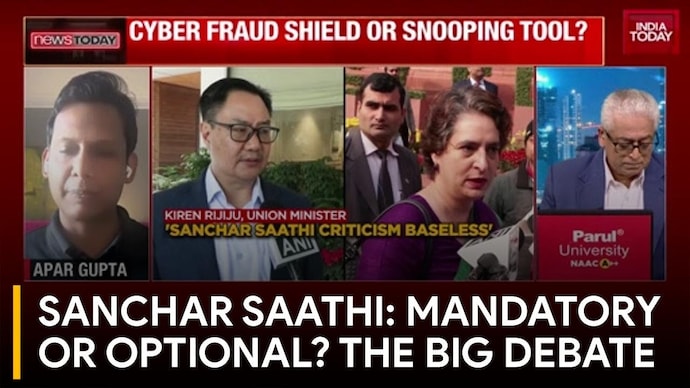
Sanchar Saathi controversy: Government calls app optional after privacy backlash; Experts debate mandatory pre-install fears
This special report focuses on the controversy surrounding the government’s directive to pre-install the ‘Sanchar Sathi’ app on smartphones. While the government, represented by Principal Secretary to the Maharashtra Chief Minister Brijesh Singh, argues that the move is necessary to curb cybercrime and ‘digital arrest’ scams, privacy advocates raise concerns. Apar Gupta, founding director of the Internet Freedom Foundation, questions the lack of transparency, saying, “The Department of Telecommunications has not officially released the full text of the instructions.” Supreme Court lawyer NS Nappinai argues that the mandatory nature of the directive violates fundamental rights. The program also discussed the government’s latest clarification that the app remains optional for users.
Shashi Shekhar Vempati defends Sanchar Saathi pre-install order, calls snooping fears ‘exaggerated’
In this special report, Shashi Shekhar Vempati, co-founder of Deep Tech for India, defends the government’s directive to pre-install the Sanchar Sathi app on smartphones. Addressing concerns about potential state surveillance, the former CEO of Prasar Bharati has described such fears as ‘baseless and exaggerated’. They argue that the move is a ‘positive step’ to tackle the ‘huge fraud’ and ‘digital arrest’ cases plaguing India. Emphasizing its role in public interest and cyber security, Vempati highlighted that the app empowers users to block stolen phones and check fraudulent connections.

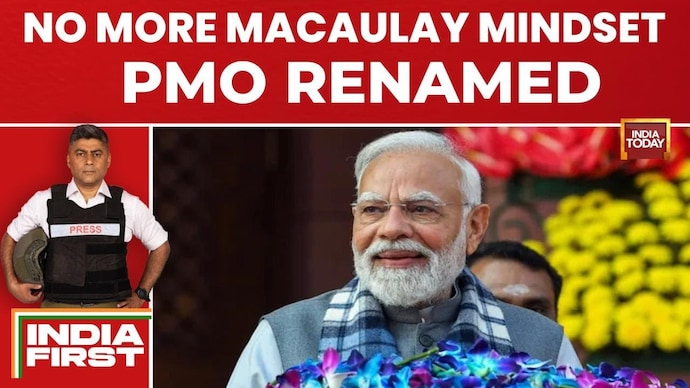
PMO renamed as ‘Seva Teerth’: Modi government pushing to end ‘Macaulay mentality’
In this special report, the focus is on the renaming of the Prime Minister’s Office to ‘Seva Tirtha’ as part of the government’s effort to decolonize Indian institutions. Prime Minister Narendra Modi claims that ‘An Englishman named Macaulay sowed the seeds to uproot India from its roots’ (An Englishman named Macaulay sowed the seeds to uproot India from its roots). The event, hosted by Gaurav Sawant, debates whether this shift from ‘satta’ (power) to ‘seva’ (service) is a genuine cultural reset or merely ‘nominal government’, as alleged by the Congress. The guests include BJP’s Charu Pragya, Congress spokesperson Ashpreet Khadiyal, historian Makhan Lal and senior journalist Neerja Chaudhary.