



Not just AI, Sam Altman now wants to beat Sundar Pichai and Satya Nadella in the cloud game, details here
Sam Altman has hinted that OpenAI is planning to launch its own AI cloud computing service. The move could disrupt the cloud market dominated by Microsoft and Google, shifting OpenAI from consumer to provider.
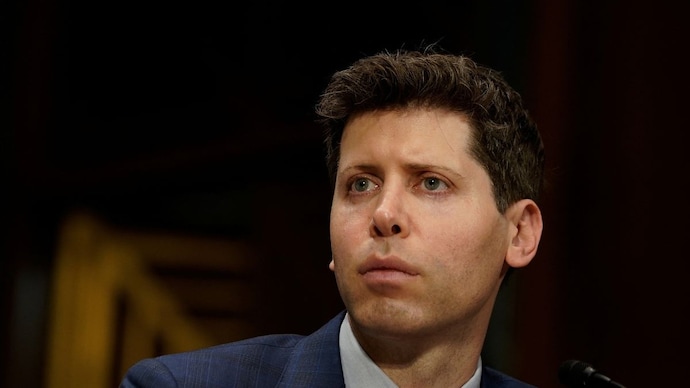

Sam Altman may have dropped his biggest hint yet about OpenAI’s next big move, and it’s not just another chatbot. In a characteristically brief post on X, the OpenAI CEO appeared to confirm that the company is preparing to get into the cloud computing business, a move that could put it in direct competition with tech giants like Google’s Sundar Pichai and Microsoft’s Satya Nadella.
“We’re also looking at ways to sell compute capacity directly to other companies (and people); we’re pretty sure the world will have a great need for the ‘AI Cloud,’ and we’re excited to introduce it,” Altman wrote.
I would like to clarify a few things.
First, the obvious: We don’t have or want a government guarantee for OpenAI datacenters. We believe governments shouldn’t pick winners or losers, and taxpayers shouldn’t bail out companies that make bad business decisions or—Sam Altman (@sama) 6 November 2025
That one line was enough to trigger a flurry of reactions in the tech world. If OpenAI is indeed creating its own “AI cloud”, it could signal one of the most significant strategic shifts since its inception, which would move the company from being a major consumer of cloud services to becoming a provider.
From AI to Cloud Challenger
Until now, OpenAI has relied heavily on Microsoft’s Azure infrastructure to power products like ChatGPT and its API services. But Altman’s latest statement suggests a future where OpenAI doesn’t just rent compute, it also sells it. In doing so, it will enter one of the most profitable and competitive areas of technology, dominated by the so-called “big three” cloud providers: Amazon Web Services, Microsoft Azure, and Google Cloud Platform.
One observer commented, “I’ve never seen OpenAI talk so candidly about building this kind of business,” noting that this is the first time the company has hinted at a full-scale commercial cloud operation. When contacted for comment, OpenAI representatives did not immediately respond.
Interestingly, this is not the first time someone inside OpenAI has hinted at such ambitions. In September, CFO Sarah Fryer expressed frustration over the company’s relationships with its cloud partners, saying that these tech giants were “learning on our dime.” Fryer suggested that OpenAI is leveraging too much of its AI information and data infrastructure to companies that may one day compete with it.
That comment seems almost prophetic now. If OpenAI actually builds its own cloud network, it could give the company a way to gain more control and more profit from its massive computing needs.
The trillion-dollar question: How will OpenAI pay for all this?
Altman’s Thursday comments were partly meant to clear up confusion about OpenAI’s expansive plans, but they also touched on a bigger question: How will the startup finance its extraordinary infrastructure expansion? Reports suggest that OpenAI has signed AI chip and data center deals worth more than $1 trillion, a staggering figure that would rival the combined capital spending of some of its biggest backers.

Becoming a cloud provider may be the answer. On a larger scale, the cloud business is a money-printing machine – just ask Amazon or Microsoft. These companies have turned their infrastructure investments into recurring revenue streams by renting computing power to other businesses.
For OpenAI, offering its own “AI Cloud” could help offset those hefty costs while also strengthening its ecosystem. This would turn one of the company’s biggest expenses into a potential profit engine.
The strategy makes sense, but it won’t be easy. The cloud market is notoriously difficult to break into, with AWS, Azure, and Google Cloud collectively controlling about three-quarters of the global market. Still, if there’s one player shaking things up with brand power, technological edge, and investor backing, it’s OpenAI.
Altman’s move is also in stark contrast to Meta’s position. Mark Zuckerberg’s company is pouring billions of dollars into AI infrastructure, but it has no cloud arm to monetize it. The lack of a clear revenue model has affected investor confidence and contributed to Meta’s recent stock meltdown.
In contrast, OpenAI is charting a path that not only reduces its reliance on its cloud partners but could also turn those same rivals into competitors.
If this plan is successful, Altman won’t just be building AI models. He would be taking aim at a part of the cloud empire ruled by Pichai and Nadel, and it could again shift the balance of power in tech. And if not, he can always turn to farming.