



Will the film industry benefit from the government’s new GST reform? Experts weigh
The aim of GST 2.0 reforms is to make cinema tickets cheaper, but experts argue that the impact will be minimal as the tickets of 100 rupees are almost extinct. While there may be some relief in single screen, multiplex audiences are unlikely to benefit.
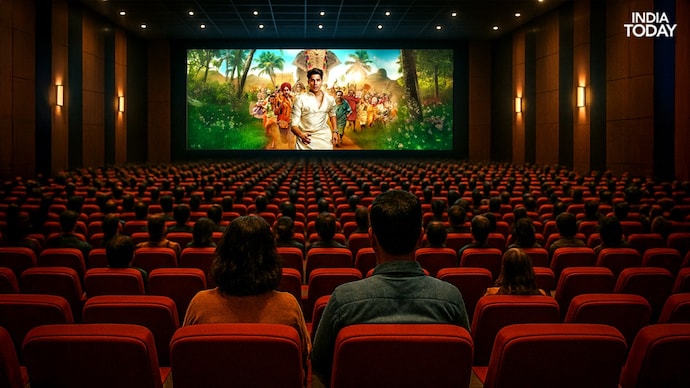

The recent announcement of the GST 2.0 reforms, including a significant decrease in the tax slab for cinema tickets, is set to create a wave in the film industry of India. While movies will first rejoice with cheap ticket prices, long -term benefits are expected to expand to growers, distributors and theater owners, potentially recovering from the epidemic to revive a field.
Under new revised GST rates, Movie ticket below Rs 100 will be shared on 5 % GST, while tickets above Rs 100 will be at 18 percent. As we believe this tax rationalism will make cinema more accessible, the business analyst, Sridhar Pillai, said how the rates should benefit the audience through cheap tickets directly, especially in South India, where single-screen and multiplex prices are relatively low compared to metros like Delhi NCR.
“Theaters should pass on profit for the audience. Whenever tax is reduced, it often does not reflect in ticket prices. If this happens, it is good; otherwise, the government should ensure this. For example, if the ticket is reduced by Rs 100 and 5 percent, the audience should see that entertainment is necessary. Below Rs 100-150 for single screen.
On one side, where we think that Low price tickets can attract more people Back to theaters, another business analyst, Rohit Jiswal, begged separately and believes that the government’s decrease in GST on a movie ticket will not affect the audience or theaters. He told India Today that such changes will lead to an increase in ticket prices in the end.
“Today, tickets priced at Rs 99 or less than Rs 100 are mostly limited to single screen or multiplexes on specific days like Tuesdays. Even in single screen, such a price is only for rear stalls, not balcony. Therefore, I don’t think there will be no real change in GST. Explanation.
“Single-screen audiences will continue as usual, while owners of multiplexes will increase ticket prices to maintain 18 percent tax slab. Even otherwise, it will not affect the footfall, as the highest collections are always on Friday, Saturday and Sunday-when the prices cannot be reduced. The business structure will also remain the same.”
The new GST Revamp, which aims to make cinema more economical, seems to be a flop show as tickets above Rs 100 will continue to attract 18 percent GST, there will be no change in their current rates. Multiplex audiences, usually paying between 150 and 400 rupees per ticket, will still abolish that amount without any relief.
Expanding his argument, Girish Wankhede, film business expert and former PVR National Marketing Head, stressed that the government’s move is more symbolic than practical. He reported that the ERA of Rs 100 is quite eliminated, and most of the single screens are either shut down or are converted into multi-screen, the revised GST slab provides little real advantage to today’s cinema landscape.

“Earlier, Rs 100 was usually a ticket price on a single screen. The price of multiplex next to these single screen was never a price below Rs 120, and today, no multiplex gives tickets for less than Rs 200. Therefore, it is no real purpose to talk about 5 percent GST profit on Rs 100, because such a kind of prolifices were not closed.
He said, “This new GST slab of 18 percent above Rs 100 is practically the same as before, so it does not help the industry in any meaningful way. You will not get proper cinema with tickets of 100 rupees, except some, who complements the family audiences or are running with B-G-made or C-grade content,” he said.
While GST 2.0 reforms were announced with the intention of making cinema more economical, experts are divided on their actual impact. For audiences in small cities and single screens, this step may bring marginal relief, but for most filmmakers who are often multiplexes, much less likely to change.
The film industry, along with high operating costs and changing audience habits, later changing the audience habits, may require deep structural reforms beyond the twix so that the magic of the big curtains can be really revived.